
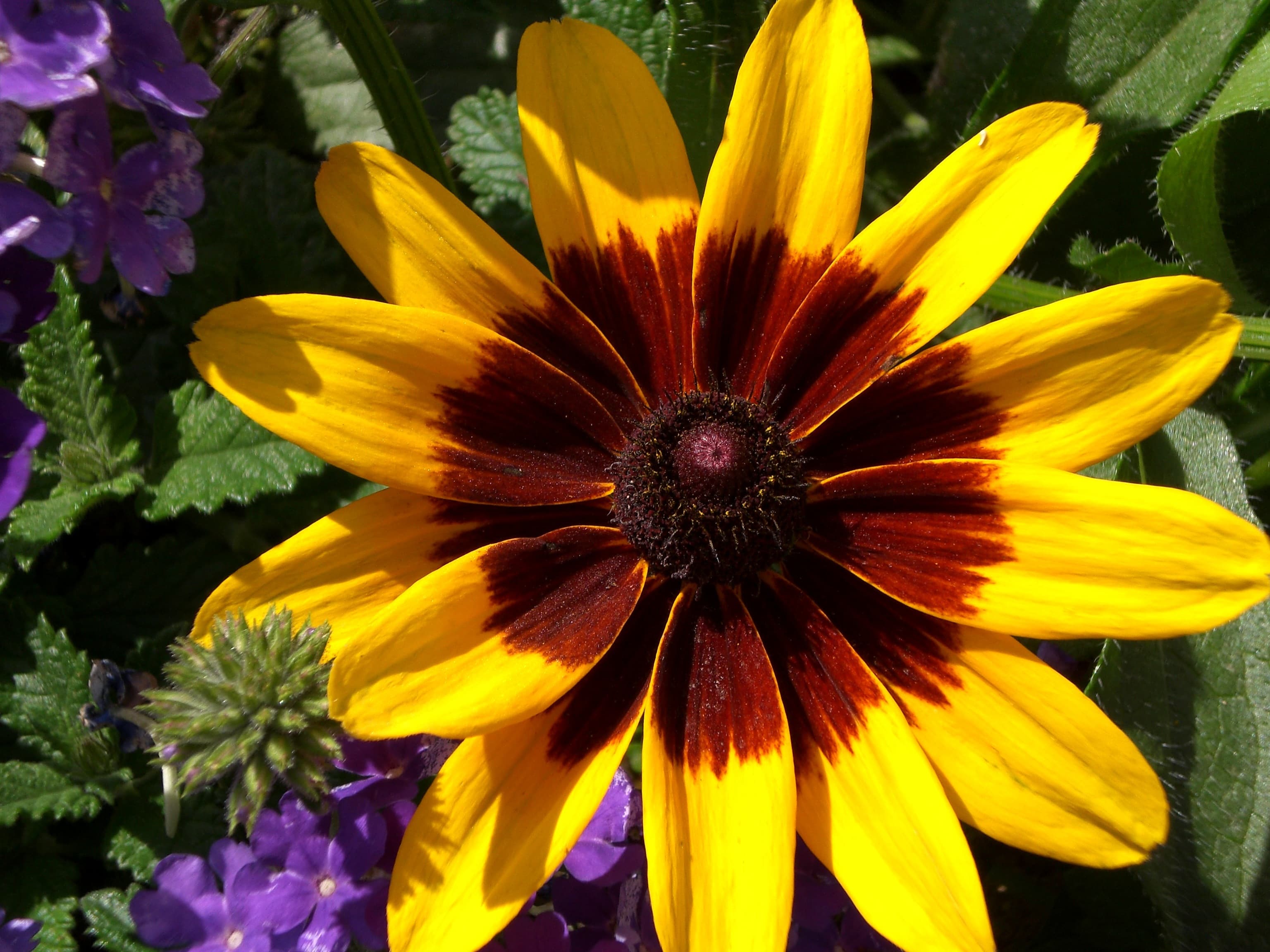
Why Every Garden Needs a Black-Eyed Susan
There are plants you coddle and plants that coddle you back. Black-Eyed Susan — Rudbeckia hirta — firmly belongs in the second camp. From the moment its first golden ray petals unfurl in July, this unassuming native wildflower gives more than almost any other plant per square foot: nonstop color through October, seeds for wintering songbirds, nectar for over 17 species of native bees, and a resilience that laughs at drought, clay soil, and neglect.
Whether you're building a pollinator meadow, filling a sunny border, or just planting something that will actually come back — Black-Eyed Susan deserves a prominent place in your garden plan.
---
At a Glance
- Botanical name: Rudbeckia hirta
- Common names: Black-Eyed Susan, Brown-Eyed Susan, Gloriosa Daisy
- Plant type: Perennial (often behaves as a short-lived perennial or biennial; self-seeds reliably)
- Hardiness zones: 3–9
- Bloom time: July through October (sometimes into November)
- Mature height: 18–36 inches
- Mature spread: 12–18 inches
- Sun: Full sun (6+ hours); tolerates light afternoon shade
- Water: Low to moderate — drought tolerant once established
- Soil: Average to poor; excellent drainage preferred
- Native range: Eastern and central North America, naturalized throughout
---
What Does Black-Eyed Susan Look Like?
The flower is instantly recognizable: 2–3-inch daisy-like blooms with 8–20 golden-yellow ray petals radiating out from a raised, dark brown to purplish-black central cone — that's the "black eye." The cones are domed and prominent, giving the plant a cheerful, bold look at mid-range and fine texture up close.
Stems are upright and branching, covered in coarse, bristly hairs that give the plant a slightly rough texture — and deter deer browsing. Leaves are lance-shaped to oval, also hairy, and a medium green. In good conditions, a single plant will produce dozens of blooms over a season.
The overall effect is exuberant and wildflower-natural — equally at home in a formal cottage border as in a native planting or roadside meadow.
### Popular Cultivars
While the straight species is a garden workhorse, several cultivars expand your options:
- 'Indian Summer' — extra-large 6–9-inch blooms, AAS winner, excellent for cutting
- 'Cherry Brandy' — unusual burgundy-to-orange blooms; adds warm color depth
- 'Goldsturm' (*R. fulgida* var. sullivantii) — longer-lived, more uniform, exceptional for mass planting
- 'Toto Gold' — compact 10-inch dwarf, perfect for containers and borders
- 'Prairie Sun' — golden center instead of black; airy and bright
---
Growing Conditions & Care
Sun
Full sun is non-negotiable for peak performance. Black-Eyed Susan planted in 6+ hours of direct sun blooms the most, stands the tallest, and resists disease best. In partial shade, expect leggier stems, fewer flowers, and increased susceptibility to powdery mildew.
Soil
One of its best traits: Rudbeckia hirta actively prefers lean, average, or even poor soil. Rich, amended soil encourages lush foliage at the expense of flowers and can cause floppy stems. If your soil is compacted clay or dry sandy loam — conditions that frustrate most plants — Black-Eyed Susan will settle in without complaint.
Good drainage is the one requirement it insists on. Sitting in waterlogged soil over winter is the most reliable way to kill an established plant.
Watering
Once established (typically after the first full growing season), Black-Eyed Susan is genuinely drought tolerant. Water deeply once a week during the first season to establish roots. After that, supplemental water is only needed during extended dry spells of 3+ weeks. Overhead watering can promote powdery mildew — water at the base when possible.
Fertilizing
Don't. Seriously — fertilizing Black-Eyed Susan encourages weak, floppy growth and reduces flowering. If your soil is extremely poor, a single application of balanced slow-release fertilizer in spring is all it needs. Otherwise, leave it alone.
Mulching
A 2-inch layer of organic mulch helps retain moisture during establishment and suppresses weeds. Keep mulch pulled back from the crown to prevent rot. Skip heavy mulching around established plants — they benefit from the slightly bare soil conditions that favor self-seeding.
Deadheading (or Not)
Here's where Black-Eyed Susan is unusually flexible. Deadheading spent blooms prolongs the flowering season and keeps plants tidy. But if you leave seedheads intact in autumn, you'll feed goldfinches, chickadees, and other seed-eating birds throughout winter — and you'll get a naturalized colony of volunteer seedlings the following spring. Most gardeners do both: deadhead in summer, then leave fall seedheads standing.
Dividing
Established clumps benefit from division every 3–4 years in early spring before growth begins. This reinvigorates the plant, controls spread, and gives you free plants for other parts of the garden or to share.
---
Seasonal Notes
Spring: New basal foliage emerges as a low rosette. Cut back any dead stems from last season. Seedlings from last year's plants will also appear — thin or transplant as needed.
Summer (July–September): Peak bloom season. Enjoy the floral display. If deadheading, do so regularly with clean, sharp shears.
Fall: Allow seedheads to stand. They provide winter bird food, winter structural interest, and the seeds for next year's colony. Plants may self-sow vigorously — welcome it or thin accordingly.
Winter: Stems and seedheads provide structure and wildlife habitat. Cut back in late winter or early spring, just before new growth begins.
---
Garden Uses
Black-Eyed Susan is one of the most versatile natives you can plant, adapting to almost any planting style:
Pollinator and wildlife garden: This is where it truly shines. Plant in masses for maximum wildlife impact. The blooms support bees, butterflies, and beetles; the seedheads feed birds.
Cottage garden border: Pair with ornamental grasses, purple coneflower, and Russian sage for a relaxed, abundant midsummer display. The golden blooms bridge the gap between the earlier daylily season and the fall aster season.
Meadow and naturalistic planting: Direct-sow or plant in drifts and let it self-sow freely. Combines beautifully with native grasses like little bluestem (*Schizachyrium scoparium*) for a low-maintenance meadow effect.
Cut flower garden: The straight species and especially 'Indian Summer' make long-lasting, cheerful cut flowers. Harvest when blooms are about halfway open. They last 7–10 days in the vase.
Rain garden edges: Surprisingly tolerant of occasional flooding followed by drought — perfect for the sloped sides of a rain garden.
Container planting: Compact cultivars like 'Toto Gold' work well in large containers. Use a well-draining potting mix and site in full sun.
---
Wildlife Value
Black-Eyed Susan is a powerhouse for native wildlife. Its ecological contributions are wide and well-documented:
Pollinators: The large, open flowers are accessible to an exceptional range of native bees — bumble bees, sweat bees, long-horned bees, and mining bees are frequent visitors. Migrating monarch butterflies use the blooms as a late-season nectar source during their journey south.
Birds: American goldfinches are particularly fond of the seeds and will cling to seedheads well into winter. Chickadees and sparrows also harvest the seeds. The branching stems provide perching structure.
Caterpillar host plant: Rudbeckia species host caterpillars of the silvery checkerspot butterfly (*Chlosyne nycteis*) and several moth species, making it a true multi-season wildlife plant — not just a nectar source.
Minimal pest pressure: The bristly hairs deter aphids and deer. Slugs occasionally target young growth in spring; plants quickly outgrow the damage.
---
Companion Plants
Black-Eyed Susan looks best — and performs best ecologically — when combined with other plants that share its cultural needs and extend the seasonal display:
- Purple Coneflower (*Echinacea purpurea*)** — classic pairing; same cultural needs, complementary bloom colors, overlapping bloom times. Together they form a pollinator magnet that lasts from June through September.
- Little Bluestem (*Schizachyrium scoparium*)** — native grass that turns brilliant orange-red in fall; provides vertical contrast and winter structure.
- Salvia (*Salvia nemorosa* 'Caradonna')** — spiky blue-purple bloom spikes contrast beautifully with golden yellow; blooms earlier and re-blooms after cutback.
- Russian Sage (*Perovskia atriplicifolia*)** — tall, airy, lavender-blue; same drought and sun tolerance; creates a stunning blue-and-gold combination.
- Yarrow (*Achillea millefolium*)** — flat-topped blooms at similar height; dries well; shares love of lean, dry soil.
- Blazing Star (*Liatris spicata*)** — vertical spikes of purple that bloom simultaneously in July–August; excellent pollinator companion.
- Joe-Pye Weed (*Eutrochium purpureum*)** — tall native for the back of the border; blooms at the same time and draws the same pollinators.
---
Troubleshooting
Powdery mildew: The most common issue, especially in humid summers or crowded plantings. Improve air circulation by spacing plants 18 inches apart. The disease is rarely fatal — plants usually flower through it. Choose the species over highly bred cultivars for better natural resistance.
Floppy stems: Almost always caused by too much shade or over-rich soil. Move to full sun and resist the urge to amend or fertilize.
Failure to return: The straight species R. hirta is technically a short-lived perennial or biennial in many climates. If your plants don't persist, allow self-seeding — volunteer seedlings effectively make the planting self-perpetuating. For guaranteed longer-lived plants, choose R. fulgida 'Goldsturm'.
No flowers in first year: If started from seed, many plants will focus on root establishment in year one and bloom heavily from year two onward. Be patient.
---
Starting from Seed
Black-Eyed Susan is easy and inexpensive to grow from seed — one of the best cost-effective ways to fill a large area with natives.
Direct sowing outdoors: Sow in early spring after last frost or in fall for spring germination. Simply scatter seeds on bare, lightly raked soil in full sun and press gently. Do not cover — seeds need light to germinate. Keep moist until seedlings establish.
Starting indoors: Start 6–8 weeks before last frost. Press seeds onto the surface of moist seed-starting mix — do not cover. Keep at 65–70°F. Germination: 7–21 days. Transplant after last frost, spacing 12–18 inches apart.
Cold stratification: Not required, but stratifying seeds (4–6 weeks in a moist paper towel in the refrigerator) can improve germination rates for seeds collected from the garden.
---
Rudbeckia hirta is one of those rare plants that asks almost nothing of you and gives back extravagantly in return. Plant it in full sun, ignore it after establishment, and it will reward your neglect with months of golden blooms, a living bird feeder in winter, and a self-sustaining colony that expands naturally over time. Few plants earn their space as completely as this one.
1 Comment
- TTonyMay 8, 2026
test comment on the black eyed